 Titus GahissyProduct builder, systems architect, and investor.
Notes
Things I came across and wanted to keep - sometimes in my own words, sometimes transcribed as I found them.
2026
You can't create demand, only be recognized by it
Wanting is the one thing already in the room. The work isn't manufacturing desire - it's becoming legible to a desire that was there before you arrived.
July 19, 2026Product

You can't create demand, only be recognized by it
Wanting is the one thing already in the room. The work isn't manufacturing desire - it's becoming legible to a desire that was there before you arrived.
July 19, 2026Product



We talk about building things as if the hard part is convincing someone to want it.
It isn’t. Wanting is the one thing already in the room. People want to be healthier, safer, faster, less alone, less broke. That hunger was there long before any of us wrote a line of code, and no launch plan invents more of it.
What we’re actually doing is more modest, and much harder. We’re trying to become recognizable to a want that already exists.
Demand isn’t something you generate. It’s something you get noticed by.
The distinction changes where the effort goes. If you believe you have to manufacture desire, you spend everything on persuasion - louder copy, bigger claims, more channels. If you accept the demand is already there, you spend it on clarity instead. On whether the thing you built is specific enough, and interesting enough, that someone already searching can tell you’re holding an answer.
Most products don’t fail because nobody wanted them. They fail because the people who wanted them never realized that’s what they were looking at.
Sales are just the receipt. A count of how many times a want managed to find you.
So the question isn’t “how do I make them want this?” It’s quieter. What are they already carrying, and would they recognize it in what I’ve built?
Increase the sacrifice, or reduce the desire
Every want has a price you don't set. That leaves two honest moves - and almost everyone reaches for a third one that doesn't exist.
July 18, 2026Mindset

Increase the sacrifice, or reduce the desire
Every want has a price you don't set. That leaves two honest moves - and almost everyone reaches for a third one that doesn't exist.
July 18, 2026Mindset



Every ambition arrives with a price attached, and we don’t get to set it.
Which leaves two honest moves. Pay it, or want something smaller. Increase the sacrifice, or reduce the desire.
Almost all the advice out there only sells the first one. Give more, wake earlier, want it badly enough. The second move gets treated as surrender, so nobody says it out loud.
Meanwhile the option we actually reach for is the one that isn’t on the menu. Keep the desire at full volume, keep the paying at whatever’s comfortable, and call the gap between them timing, or luck, or the market.
That gap is where the tiredness lives. Not in the climb - in the pretending.
Wanting less isn’t giving up. It’s the same arithmetic, done honestly.
Though I’d be lying if I said the two are easy to tell apart from the inside. Cutting a desire down can be clear-eyed, or it can be fear wearing the costume of peace. Nobody outside your own head can score that one for you.
So the audit is small and uncomfortable: look at what you say you want, look at what you’re actually giving, and decide which of the two numbers moves.
Either answer is respectable. Refusing to pick is the only one that isn’t.
You get over it on an ordinary Tuesday
Nobody hands you closure. One unremarkable night you notice the weight is gone, and that quiet noticing is the whole ceremony.
July 17, 2026Mindset

You get over it on an ordinary Tuesday
Nobody hands you closure. One unremarkable night you notice the weight is gone, and that quiet noticing is the whole ceremony.
July 17, 2026Mindset



Some things end without ever being closed.
The apology never comes. The conversation you rehearsed never gets its audience. The postmortem that would finally name what went wrong is never scheduled. So we wait, because it feels like an ending has to be granted by someone.
It rarely is. There’s no scene. Just an unremarkable evening, months later, when you notice you went hours without thinking about it. Then days. The thing that used to wake you at 3am barely gets a turn anymore.
That’s usually when it lands: you survived what you were sure would end you, and it happened without a ceremony.
Closure isn’t granted to you. It’s noticed, late, by accident.
The trap is that waiting isn’t neutral. As long as we’re holding out for someone else to close the loop, we’re the ones keeping it open.
None of which makes grief a scheduling problem. Some weights take years. Some never fully lift, and pretending otherwise is its own kind of cruelty.
But if you’re still negotiating with someone who is never coming back to the table - a person, a client, a version of the plan - the settlement may have already gone through without you.
You just haven’t looked up yet.
Don't leave right before it lands
Nobody can promise your hardship ends in a leap. But leaving is the only move that settles the question.
July 16, 2026Mindset

Don't leave right before it lands
Nobody can promise your hardship ends in a leap. But leaving is the only move that settles the question.
July 16, 2026Mindset



A clip found me this week with a big promise: after every long stretch of hardship and uncertainty, life owes you a quantum leap. Your only job is to not walk away right before it lands.
Part of me rolled my eyes. I’m wary of unwritten rules of life. Nobody has it figured out that neatly, and hardship comes with no receipt you can redeem later.
But I kept circling the last line, because I’ve lived its opposite. The long middle of building something is exactly where leaving feels most reasonable. The evidence is thin, the progress is invisible, and every rational voice says cut your losses. I’ve drafted that resignation in my head more than once.
Here’s what I can verify from my own scars, without the mysticism: the seasons that eventually paid off were the ones I didn’t let myself end early. Not because staying summoned the reward - but because leaving would have made the question unanswerable.
Staying doesn’t guarantee the leap. Leaving guarantees there won’t be one.
I don’t believe the universe keeps a ledger. I do believe most of us don’t have a starting problem. We have a concluding problem - we close the experiment right before the result comes in.
Maybe the rule isn’t unwritten because it’s mystical. Maybe it’s unwritten because nobody can promise it.
You stay anyway.
Discipline is what's left after the feeling leaves
Motivation is the feeling that makes the promise. Discipline is keeping it after that feeling has walked out of the room.
July 4, 2026Philosophy

Discipline is what's left after the feeling leaves
Motivation is the feeling that makes the promise. Discipline is keeping it after that feeling has walked out of the room.
July 4, 2026Philosophy



Discipline is doing the thing you don’t want to do, in the exact moment you don’t want to do it - because “later” is where standards go to die, wearing pajamas.
Your emotions are a terrible CEO. They’re short-sighted, addicted to comfort, and happy to run your potential into the ground just to avoid one difficult Tuesday. Their only job is to keep you comfortable, and comfort’s only outcome is to keep you exactly the same.
So real discipline starts when your feelings lose their voting rights. Anyone can work when the mood is convenient. The test arrives when your body files a complaint, your mind requests an extension, and your comfort shows up to court with a stack of very reasonable evidence.
That’s when discipline becomes the quiet violence of keeping a promise to yourself after the feeling that made it has left the room. Every promise you break teaches your mind not to trust you. And every promise you keep, even a tiny one, is a receipt that says: this person can be counted on.
What if you're not an overthinker?
Maybe the mind that won't stop isn't broken - it's an executive engine that was never taught when the workday ends.
July 3, 2026Mindset

What if you're not an overthinker?
Maybe the mind that won't stop isn't broken - it's an executive engine that was never taught when the workday ends.
July 3, 2026Mindset



A video by Nic Coy stopped me mid-scroll with one question: what if you’re not an overthinker - what if you have an unusually active executive mind that was never taught when to stop?
She points to psychologist Robert Sternberg’s idea of meta-components - the CEO of your brain. They don’t solve the problem; they decide what the problem is, pick the strategy, and monitor whether it’s working.
I read that list of traits - noticing patterns others miss, anticipating failures before they happen, running contingency plans, connecting unrelated ideas - and recognized my job description. It’s what makes someone an architect.
But the same engine has a shadow mode. When your nervous system decides the world is unsafe, it doesn’t power down - it redirects. Planning becomes worrying. Monitoring becomes hypervigilance. Evaluating becomes self-criticism.
The goal was never to think less - it’s to teach the engine which problems deserve its brilliance and which ones deserve its silence.
I’ve lost whole evenings to my mind inventing problems just to have something to solve. Nobody asked it to. It just loves the work.
So now I try to catch it early with one question: is this actually a problem, or is it just something I’d enjoy solving?
Maybe that’s the whole difference between intelligence and wisdom.
The more at peace you get, the less chaos you tolerate
Guarding your peace looks like withdrawal from the outside and feels like alignment from the inside - your energy stops being public property.
July 3, 2026Mindset

The more at peace you get, the less chaos you tolerate
Guarding your peace looks like withdrawal from the outside and feels like alignment from the inside - your energy stops being public property.
July 3, 2026Mindset



The more at peace you become, the less chaos you can stomach. It’s not that you grew fragile. It’s that you finally have something worth protecting, and the noise now costs you something it never used to.
So you stop explaining yourself to people committed to misreading you. You stop showing up in rooms that leave your chest tight. You start choosing silence over winning the point, distance over a connection you have to force. From the outside it looks like withdrawal. From the inside it feels like alignment.
Your energy stops being public property. It becomes territory, and you get to decide who is allowed to cross it. Some people will read that boundary as cold, distant, changed. Let them. They weren’t there for what it took to get here.
Protecting your peace was never about locking the world out. It’s about keeping your inner world quiet enough to still hear yourself in it.
That’s not isolation. That’s maintenance for a life you actually intend to keep.
Getting better feels like getting worse
The stretch where you feel dumb, weak, and behind isn't proof you're failing - it's usually just what growth feels like from the inside.
July 2, 2026Philosophy

Getting better feels like getting worse
The stretch where you feel dumb, weak, and behind isn't proof you're failing - it's usually just what growth feels like from the inside.
July 2, 2026Philosophy



No one warns you that getting better feels like getting worse. You pick up something new and feel stupid before you feel capable. You start training and feel weak before you feel strong. You walk toward the thing that scares you and feel more afraid, not less - right up until the moment you don’t.
That’s the trick of it. Life keeps disguising growth as failure, and progress as pain. To heal you first have to sit inside the hurt. To reach any kind of peace you usually have to pass through the chaos. So when it feels hard, that’s not always the signal to stop - more often it’s the signal that it matters.
Becoming is messy by design. It breaks who you were to make room for who you’re turning into. And you don’t build strength on the days you feel powerful - you build it by showing up on the days you feel powerless.
So if you’re tired, unsure, and convinced you’ve fallen behind, read that as a location, not a verdict. You’re not failing. You’re in the middle of becoming - and probably closer to what you’ve been working toward than it feels.
Change doesn't take time. It takes a decision.
We treat change like it needs runway. It doesn't - it turns on a single decision, and most of the waiting is just the decision deferred.
July 1, 2026Philosophy

Change doesn't take time. It takes a decision.
We treat change like it needs runway. It doesn't - it turns on a single decision, and most of the waiting is just the decision deferred.
July 1, 2026Philosophy



We tell ourselves change takes time. That we need more of it - more preparation, more certainty, more runway - before anything can really shift. It’s a comfortable story, because it means today doesn’t have to be the day.
But most change isn’t slow. It’s a decision postponed for years and then made in a second. The months that came before weren’t the change - they were the waiting. The pivot itself takes a moment: the moment you stop negotiating with yourself and choose.
That’s the part worth remembering when you feel stuck. You’re probably not short on time. You’re one decision away, and quietly calling it a timing problem to avoid making it.
You don’t need more time. You need to decide.
The Gita says do the work, forget the reward
Karma yoga's oldest paradox - the moment you stop gripping the outcome is the moment it starts arriving.
June 30, 2026Philosophy

The Gita says do the work, forget the reward
Karma yoga's oldest paradox - the moment you stop gripping the outcome is the moment it starts arriving.
June 30, 2026Philosophy



Isn’t it ironic - when you expect nothing, you receive everything. It sounds like a motivational poster, but the idea is thousands of years old. The Bhagavad Gita put it plainly: your right is to the work, never to its fruit.
We get this backwards. We fall in love with the outcome - the result, the reward, the applause - and treat the work as the toll we pay to reach it. So we grip. And gripping is its own kind of resistance: the tighter you hold the thing you want, the further you push it away. You chase instead of attract. You grip instead of receive.
Detachment isn’t not caring. It’s caring about the right thing - the effort, the showing up, the craft - and letting the result be the result. You do the work because it’s who you are, not because of what it might give you.
Desperation repels what you want. Detachment invites it in.
Machiavelli says your morality is a performance
His bleakest claim - the virtue we show is a thin mask over a self-interested animal, and some people wear it on purpose.
June 29, 2026Philosophy

Machiavelli says your morality is a performance
His bleakest claim - the virtue we show is a thin mask over a self-interested animal, and some people wear it on purpose.
June 29, 2026Philosophy

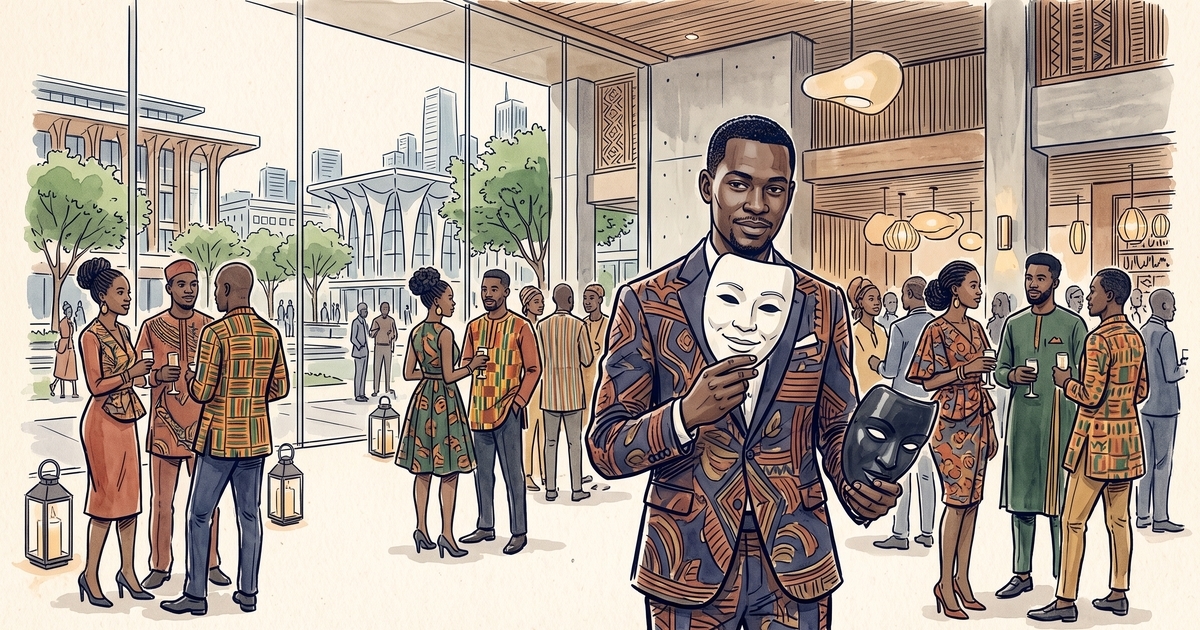
According to Machiavelli, humans are pretending to be civilized, moral, and good. But at the heart of every human soul is a beast, an animal that only wants what it wants.
We act like we care about right and wrong. We follow rules, show kindness, practice virtue. But that’s just a thin shell - underneath, we’re animals focused on getting our desires met. The morality we display is often just performance.
Machiavelli says: drop the act, except when the act serves you. If being gentle gets you ahead, be gentle. If seeming trustworthy opens doors, seem trustworthy. But never actually become these things. The point isn’t to be good, it’s to be effective - to use whatever face works in whatever situation.
Now, you don’t have to live this way. Most people would call this a cold, empty way to exist. But understanding it matters, because whether you accept it or not, some people are playing this exact game - and they’re playing it on you.
Kierkegaard says you'll regret it either way
Marry or don't, you'll regret both - so if regret is the price of every path, why keep choosing the one that keeps you small?
June 28, 2026Philosophy

Kierkegaard says you'll regret it either way
Marry or don't, you'll regret both - so if regret is the price of every path, why keep choosing the one that keeps you small?
June 28, 2026Philosophy



Is it really a risk, if what you’re risking is a life you never wanted anyway? We treat change like it’s dangerous, like staying still is the safe option. But staying in a life that’s slowly killing you isn’t safe. It’s just familiar.
Kierkegaard said it best. Marry, and you will regret it. Don’t marry, and you will also regret it. Marry or don’t marry, you will regret it either way. That’s the truth no one wants to admit: there is no choice that comes without regret. Every path costs you something.
So if regret is guaranteed either way, why are you choosing the version that keeps you small? Take the risk - not because it’s safe, but because the alternative is regretting a life you never even tried to live.
At least regret the things you did, not the things you were too scared to.
Become Someone Who Finishes Things
The world is drowning in starters. Finishing is the tax that turns a vision into proof.
June 27, 2026Mindset

Become Someone Who Finishes Things
The world is drowning in starters. Finishing is the tax that turns a vision into proof.
June 27, 2026Mindset



I came across this on TikTok. I couldn’t track down who said it first, so I can’t give them the credit they’re owed - but it stuck with me enough to write it down.
In order to succeed in life, you must become someone who finishes things. Because the world is drowning in starters. Everyone has the idea. Everyone has the plan. Everyone has the vision board. Starting is free. It’s fun. It gives you the dopamine of feeling like you’re becoming someone without the cost of actually having to. But finishing the job is the tax. And the bill always comes due.
Success isn’t built on talent. It’s built on the boring, unsexy, unglamorous act of taking something all the way to the end. Even when the excitement is gone, even when the novelty has worn off, even when the only thing keeping you in the chair is the quiet, private promise you made to finish what you started. It is built on completion.
Most people will abandon the plan right before the finish line and call it “not the right fit.” But it was never about the fit or the passion or the timing. It was about the tolerance for what finishing actually costs. It’s not just a skill, it’s an identity. Proof that your vision is not just entertainment for your own imagination.
So if you want to succeed, stop being impressed by your ability to start. Start measuring yourself by your willingness to finish.